 Ilmari Salmisto
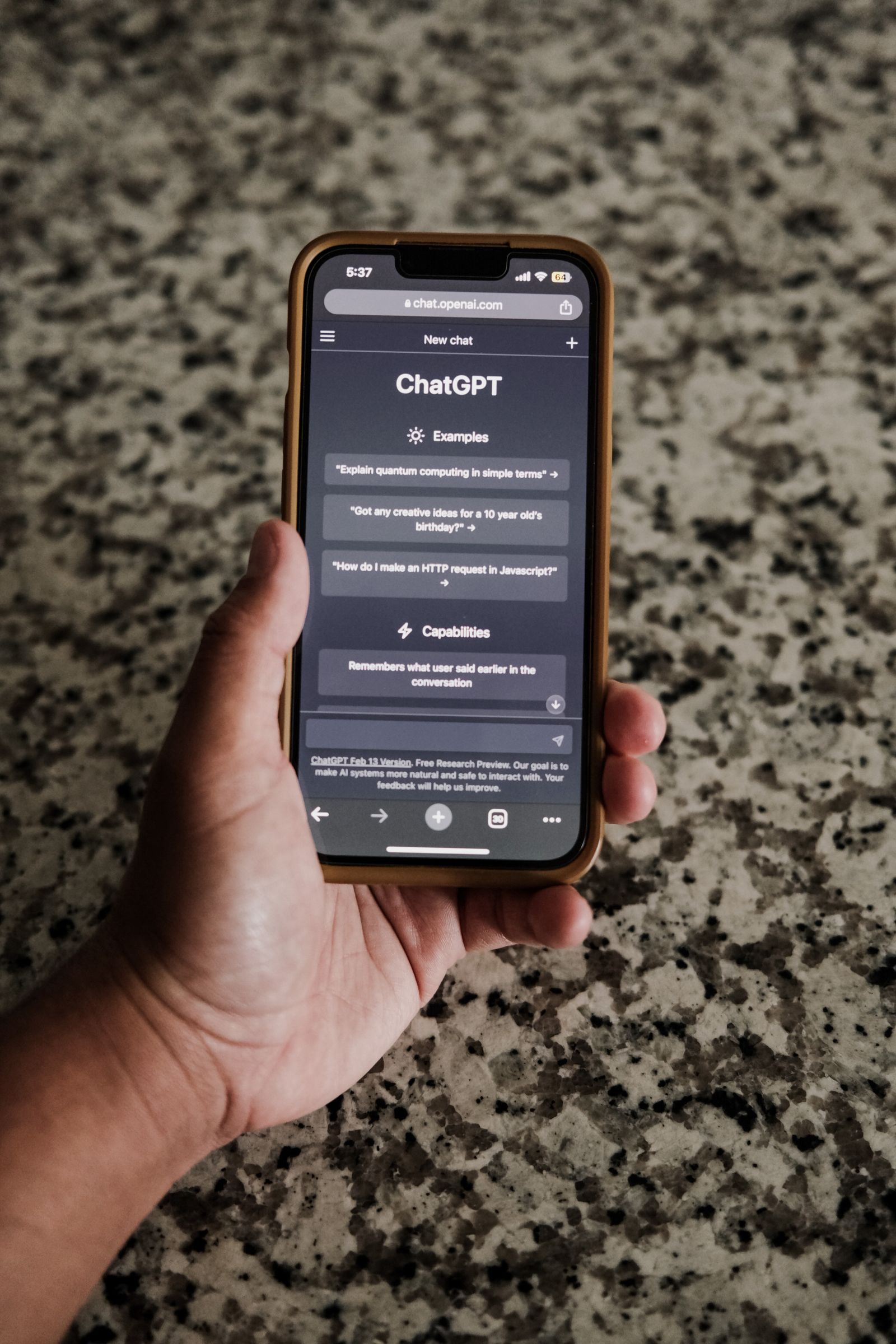
Many business owners have at some point been stuck in a loop with a chatbot they could not escape. You ask one thing, the bot answers something completely different. You try again, and it offers the same menu for the third time. In the end you shout at the screen "I want to talk to a human" and the bot does not understand that either. This experience is exactly why the word chatbot makes so many faces tense up.
The good news is that those bots are not the same thing people are talking about now. AI has changed the chatbot from the ground up. Let us go through what a modern AI chatbot really is, where it fits, where it does not, and how you build one that helps the customer instead of annoying them.
What a modern AI chatbot is
The old chatbot was like a phone menu in text form. It only knew the paths someone had built in advance. Press one for orders, press two for billing. If your question did not fit a ready made path, the bot was helpless. It did not understand a word. It just recognized keywords and guessed.
A modern AI chatbot works differently. It is built on a language model, the same technology that runs today's AI tools. It understands free text. You can write your question however you like, in your own words and with typos, and it still gets what you mean. It does not force you into a menu. It has a conversation the way a person would. This is what the term conversational AI means.
The most important difference is this. The old bot recognized words, the new one understands intent. When a customer writes "my package hasn't arrived yet," the old bot might have latched onto the word package and offered a product list. The new one understands that this is about a delayed delivery and knows how to find the right information. This one change is what separates a useless bot from a useful one.
In short: the old chatbot follows a fixed path and recognizes keywords. A modern AI chatbot understands what the customer actually means and responds naturally in its own words. The difference is huge, even though both go by the same name.
Where an AI chatbot actually fits
A chatbot is not good for everything, but in certain areas it is excellent. What these have in common is that they come up often and the answer can be found in information the company already has. Here are the situations where a bot brings real value.
Frequently asked questions
Most customer service messages are the same questions repeated over and over. Opening hours, delivery times, return policy, how pricing works, how to do something. A person answers these same things dozens of times a week. A bot handles them in an instant, at any time of day, and never gets tired. This alone often frees up a big share of your customer service time.
Pointing customers to the right place
Sometimes a customer does not really need an answer, they need directions. Where do I find my invoice, who do I send a complaint to, how do I book a time. The bot sends the customer straight to the right place instead of them searching the site or waiting on the phone. This improves the experience even when the bot does not solve the matter itself.
Pre handling and sorting messages
This is an underrated use case. The bot can take a message in, ask a few clarifying questions and sort it into the right category before a human ever sees it. When the message reaches the team, it already carries information about what it is about and what is needed. The person does not start from scratch, they continue from a situation that is already set up.
Where an AI chatbot does not fit
This is just as important to know, and many leave it unsaid. A bot is not the right answer for everything, and forcing it into the wrong place is the quickest way to ruin the customer experience.
Complex situations, where you need to combine several things and use judgment, belong to a human. If a customer's case is unusual or requires bending the rules, the bot cannot handle it and should not try. The same goes for sensitive situations. When a customer is disappointed, angry, or it is about a complaint, a human is always better. A disappointed customer gets even more upset if a machine tries to soothe them with canned phrases.
The rule of thumb is simple. The more emotion or responsibility there is in a situation, the more surely it belongs to a human. The bot handles the routine, the human handles the moments where the customer relationship is actually decided. A good bot does not try to be everything. It knows its own limits and passes the ball to a human in time. If a bot is not enough and you need judgment and action, you are looking at a broader AI solution.
What to realistically expect
This is where it pays to be honest, because inflated expectations are the biggest cause of disappointment. An AI chatbot does not replace a customer service agent. If someone promises that a bot will handle all of your customer service and you no longer need people, be careful.
What a bot really does is lighten the load and speed up answers. Easy and repetitive questions get handled right away, which leaves people time for the situations where they are actually needed. The customer gets an answer immediately instead of waiting in a queue, and the team is freed from repeating the same things. The benefit is real, but it is support, not a replacement.
A good chatbot does not remove the human from customer service. It removes the part of the work that anyone could do, and leaves behind the part where a human is genuinely needed.
A practical example: customer service for a small online store
Take a concrete situation. In a small online store, the owner or a couple of employees handle customer service alongside their other work. Messages come in constantly, and a big share of them are about the same thing. Where is my order, can I change the size, how does the return work, when will the product be back in stock. Every message interrupts other work and takes a moment, and there are dozens of them a day.
An AI chatbot fits this well. It answers delivery, return and availability questions right away, because the information is in the store's own data. When a customer asks about the status of their order, the bot can check it in the system and tell them where the package is. When someone wants to complain about a damaged product or is unhappy, the bot recognizes the situation and routes the message straight to a human, with information about what it is about.
The result is that the owner no longer answers the same delivery question twenty times a day. They spend their time on the messages that actually need solving. The customer gets an answer right away even in the evening, when no one is at work. The same logic repeats in almost every field where a lot of the same questions come in, whether it is a hair salon, an accounting firm or a marketing agency.
How to build a chatbot the right way
The quality of a bot is not decided by the technology, but by how it is built. This is also how we approach it when we build and install conversational AI for customer service. Here are three things that separate a useful bot from a frustrating one.
Your own information and FAQs as the base
A bot is exactly as good as the information it answers from. You give it the company's own material: frequently asked questions, guides, delivery terms, product details. The more accurate and up to date the information is, the more reliable the bot is. If you do not give it information, it either cannot answer or, at worst, makes up an answer. Most of a good bot is actually about gathering good information.
Clear limits
The bot has to be told clearly what it answers and what it does not. It must not guess or promise things it does not know. It is better for the bot to say honestly "I can't handle this, let me connect you to a human" than to give a wrong answer in a confident voice. Clear limits protect both the customer and the company's reputation.
A handoff to a human when the bot cannot help
This is the single most important feature of the whole bot. There always has to be a smooth path to a human. When the bot notices it cannot help or that the situation is sensitive, it should hand the conversation over to a human seamlessly, ideally with information about what has already been discussed. The customer should not have to repeat their case from the start. A bot that does not let you reach a human is that old frustrating bot in a new shell.
The most common mistakes
The same mistakes repeat in almost every project where a bot fails. It is worth knowing them in advance.
- The bot does not let you reach a human. This is by far the worst. When a customer cannot get to a human, the bot becomes a barrier between the help and the customer. There always has to be a clear way out.
- The bot is not given proper information. Without up to date base information, the bot guesses or invents. This is the quickest way to lose a customer's trust.
- The bot tries to handle everything. When a bot pushes into sensitive or complex situations, the result is worse than no bot at all. Give it a clear, defined role.
Notice that none of these is a technical problem. They all come down to how the bot is designed and what it has been given to do. That is why thinking through the early stage of building matters more than the technology itself. That design work is the core of our conversational AI consultancy.
Where to begin
You do not need a bot that knows everything right away. You need one that handles well what gets asked most often. Here is how to get started.
First gather together the questions that come up most often in your customer service. Go through the messages from the last couple of months and see which things come up time after time. This list is the foundation of the bot. Start the bot by answering exactly these, give it a clear scope and a reliable path to a human, and see how it works with real customers.
Only expand after you see that the foundation works. A small bot that handles the five most common questions well is far more valuable than a big bot that tries everything and fails at half of it. Start narrow, measure how much time is saved and how satisfied customers are, and grow from there.
If you want to find out whether a chatbot would fit your company's customer service, book a free discovery call and let us go through it together. No sales pitch, no commitments. I will tell you honestly if a bot is not a sensible solution for your situation.